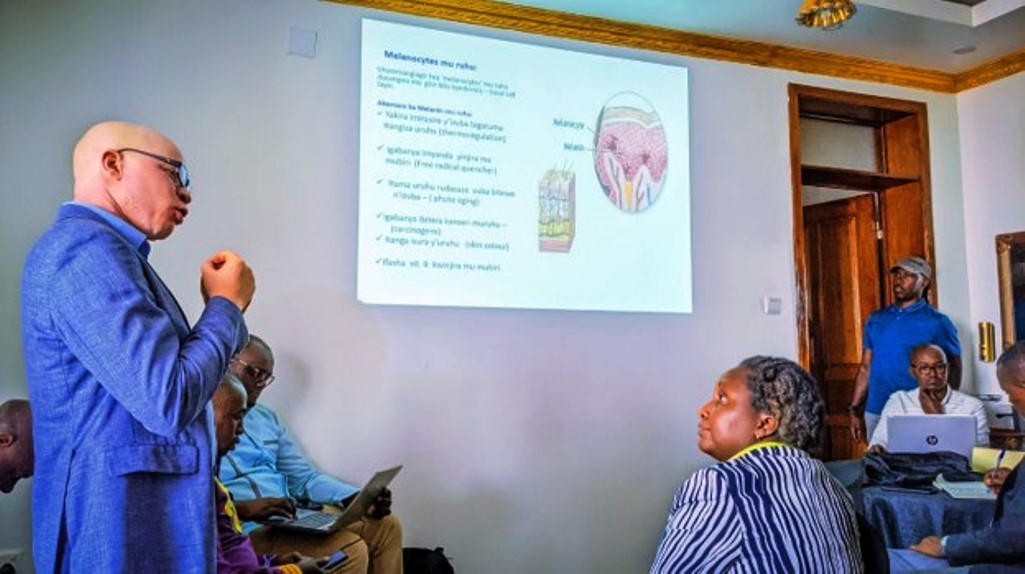
Dr. Nicodeme Hakizimana, the Founder of OIPPA
Climate change has always been seen by the majority of the population as mainly an environmental problem, impacting rain patterns and agricultural produces due to extreme weather changes impacting communities around the world especially in the sub- Saharan Africa and nation islands of the Pacific Ocean.
That is not the only problem with climate change. Another silent killer is skin cancer among the population of the people with albinism in poor and most vulnerable countries like Rwanda.
Albinism is a lack of Melanin protein in people which causes the body to lack ability in producing melanocide which produces the protein that keeps the skin, eyes and hair dark. The condition is inherited from parents, usually Melanin protein protects the skin from the Ultra Violate rays (UV) from the sun.
The protein also helps the skin in minimizing the intensity of the sun rays while giving an individual the ability to have a clear eye sight of which the people with albinism normally do not have due to lack of Melanin protein.
The protein also helps the skin from getting old by keeping it younger for long while providing the body with Vitamin B and protecting it from bad air and harmful fumes from damaging the body cells.
The increase in temperatures around the world, the skin cancer cases among Albino communities due to the exposure on UV rays is often under reported, many of them patients are poor and reside in rural areas with less of no information at all.
Before the government of Rwanda gave a directive to RBC to provide Sun screen oil to all the people with albinism by using health insurance (Mituelle de sante) some of them got injured and never knew the wounds would develop and become cancer. In most rural uneducated traditional families would call albinos or their parents that they are a Curse from God due to sins their parents had committed in the past.
Dr. Nicodeme Hakizimana, the Founder of OIPPA says, “Albinism is not a disease it is a disability mainly attributed to changes into genetic makeup of genes responsible for producing Melanocide which produces Melanin protein. A person with albinism does not have the capacity in his blood to produce it due to the disability.” He says.
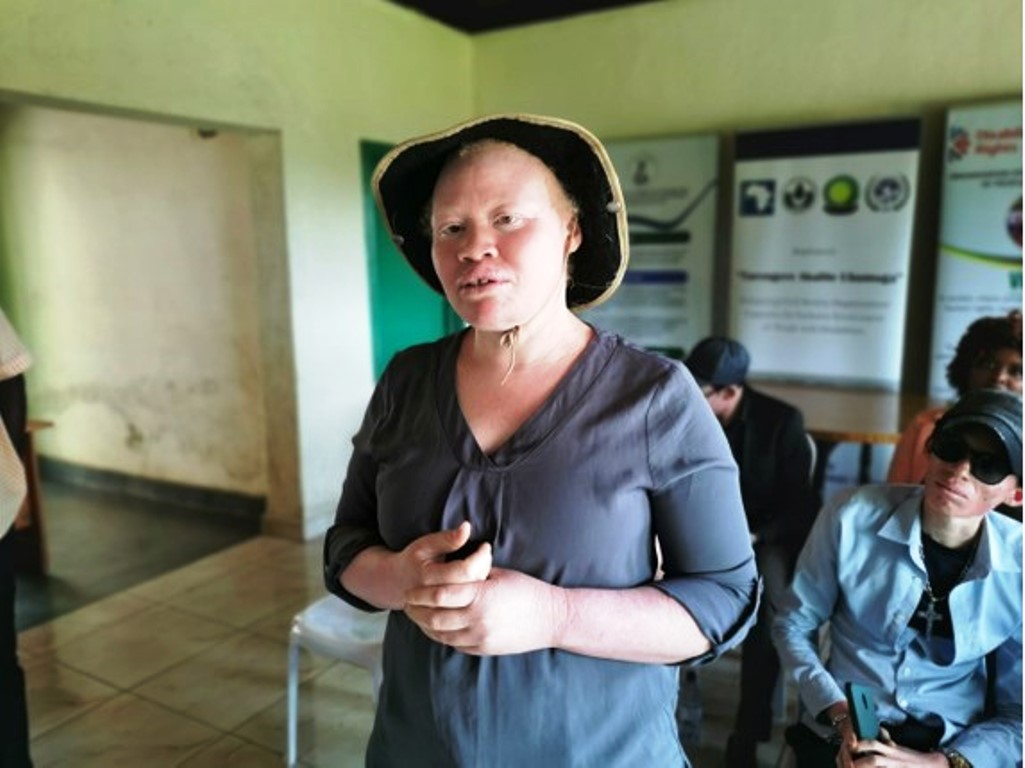
Ms. Vumilia Mukamana, an accountant with OIPPA. (Photo/ Kigalitimes)
Ms. Vumilia Mukamana, an accountant with OIPPA, says; “people have wrong misconceptions about us, most of the men who wanted to have relationships with me they only wanted to sleep with me because someone told them that they will get good fortunes and am one of the victims, my first boyfriend made me pregnant, after I gave birth he never came back and I realized he wanted to try the lack people told him he would get by sleeping with me. It’s very sad that I have to take care of my child alone without his support.” She narrates.
“The second time I got into another relationship it was hard to believe in men again but I got pregnant again with a second child but, at least the second man tries his best to support me not like the first one.” Vumilia adds.
With most of the people with albinism residing in rural areas they face serious challenge with the increase in temperatures due to climate change. It affects both, their productivity on farms and on their bodies due to working for many hours without protection from UV rays.
Patrick …, a musician from Nyarugenge district and a married person with albinism says; “I was once in a relationship for 3 years but, the lady just extorted my money and wasted my time he only told me at the end that she never wanted to get married to me I got so heartbroken to the extent of thinking of never fell in love again. Finally, I got a call from someone who got my number via my YouTube channel and I proposed immediately and two weeks later we got married. We are happy and we have two children.” He narrates.
Even though the government passed a directive to avail Sun Screen oil for people with albinism, the distribution from district pharmacies to health centers is still a challenge citing that, officials from the centers rarely put it on the requisition list for medicines needed.
The government passed a directive to provide sun screen oil which protects people with albinism from sun rays on…..
In Rwanda to date they are 1,860 people with albinism of which are 5 years and above according to the 5th Rwanda Population and Housing Census.
1 out of 20,000 people has albinism in the world.
By Kayitare Jean Bosco
About The Author